The beauty of diversity
ELISA RAMÍREZ CANDELA
Biomedical Engineer, Master’s degree in Machine Learning, and PhD candidate in Health and Wellbeing Technologies at the Universitat Politècnica de València
3/16/20265 min read
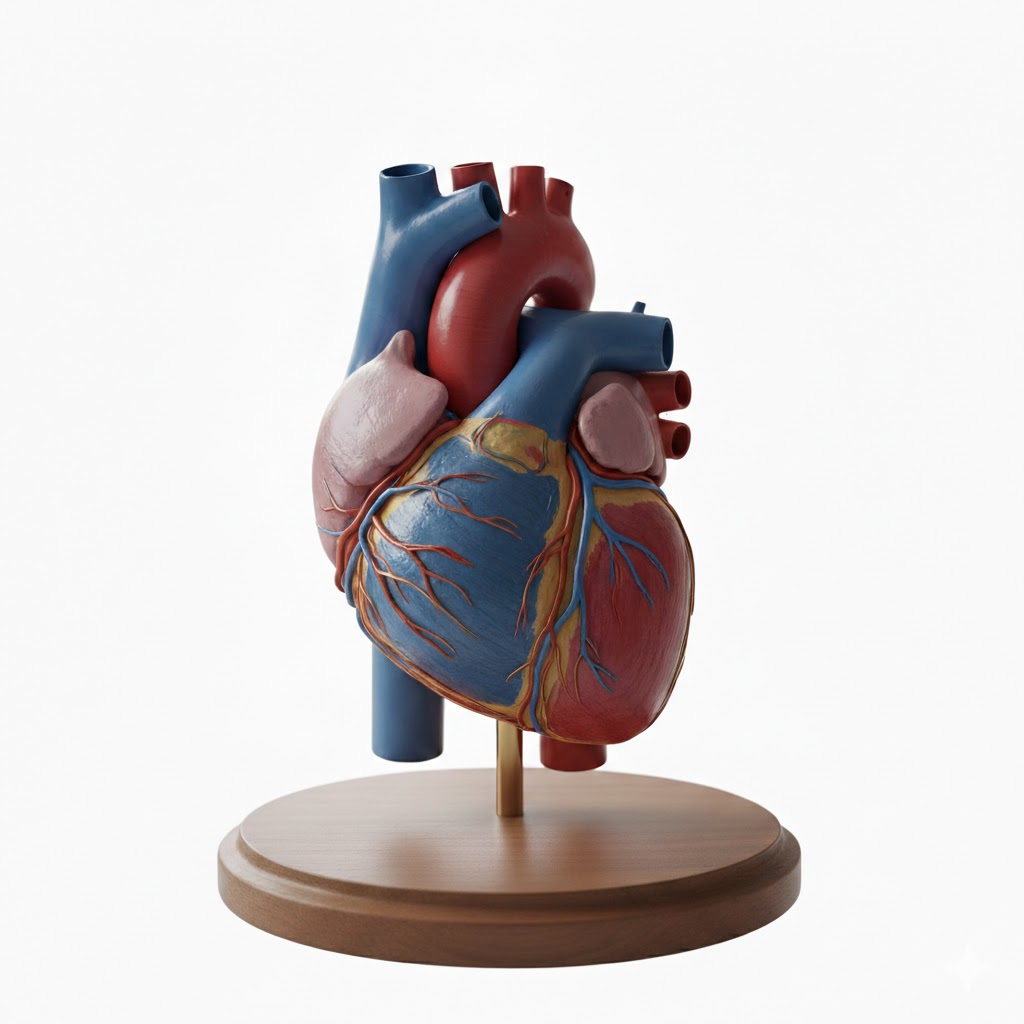
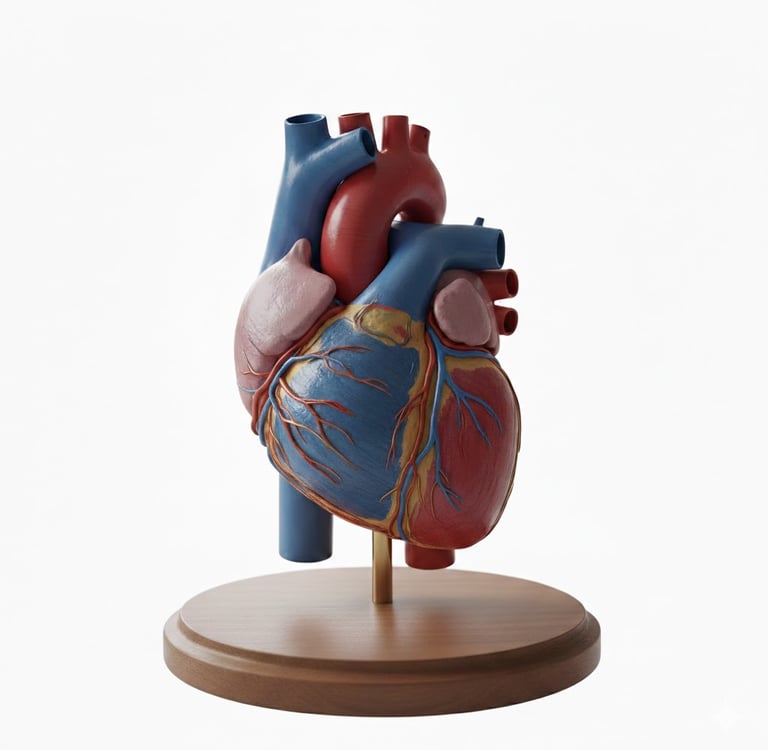
The human heart is an extraordinarily complex organ whose primary function is to pump blood throughout the body, ensuring that all tissues receive oxygen and essential nutrients. This vital task is made possible by the coordinated activity of highly specialized cells known as cardiomyocytes. These cells have the ability to activate electrically through changes in their electrical potential, generated by the movement of sodium, potassium, and calcium ions across the cell membrane and between neighboring cells [1]. This dynamic electrical process, which variates over time, is known as the action potential.
Variations in the concentration of these ions enable each cardiomyocyte to contract. When this process occurs in an organized and synchronized manner across millions of cells, the heart contracts as a single functional unit. This coordinated contraction allows the heart to efficiently pump blood to the lungs and the rest of the body. The precision of this mechanism arises not from cellular uniformity, but from the coordinated integration of diverse cellular properties serving a common purpose [2].
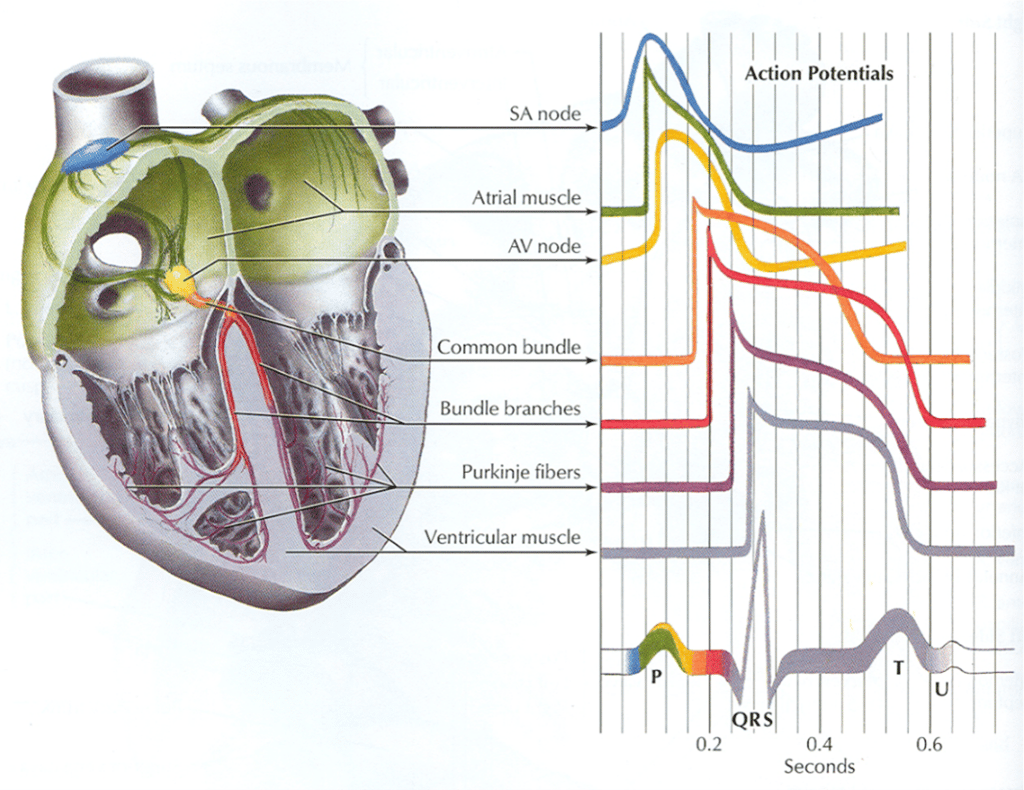
Not all cardiomyocytes are the same, nor do they all generate identical action potentials. Some cells exhibit longer or shorter action potentials, while others activate earlier or later in the cardiac cycle (see Figure 1). A clear example of this specialization can be found in the cells of the sinoatrial node, which are capable of spontaneous depolarization and therefore act as the natural pacemaker of the heart. In contrast, most other cardiomyocytes are not self-excitable and rely on electrical impulses transmitted from neighboring cells to become activated. Likewise, endocardial cells differ in their properties from epicardial cells, and atrial cardiomyocytes are distinct from ventricular ones [3,4]. But does spontaneous activation make sinoatrial node cells better than ventricular cells? Or are endocardial cells superior to epicardial ones simply because they activate earlier? Such questions are meaningless, because each type of cell possesses distinct properties precisely to fulfill its specific role within the coordinated whole. No cell type has value in isolation; each depends on the others to carry out the heart’s function. When this meticulously organized and synchronized diversity is disrupted, pathological conditions may arise, potentially leading to arrhythmias or heart failure.
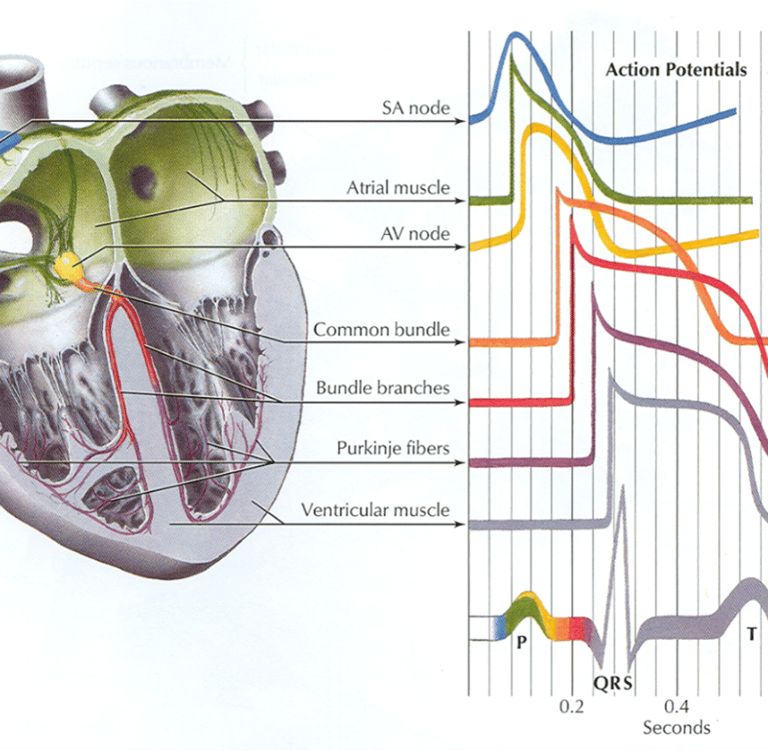
Figure 1. Action potential morphology in different locations of the cardiac muscle. Source: [5]
In an analogous way, every human being possesses unique and singular characteristics. Just as cellular diversity is essential for proper cardiac function, human diversity is the foundation of the beauty of society. Men and women, the young and the elderly, the healthy and the sick, believers and non-believers, the strong and the weak, those with left- or right-leaning political views, supporters of Real Madrid or Barcelona, the extroverted and the introverted, the humorous and the serious—all bring distinct ways of being and contributing. In addition, each person has particular gifts: some excel in analytical thinking, others in artistic expression, technology, or human relationships. This broad spectrum of people allows individuals to complement one another, compensating for weaknesses and enhancing collective strengths. A society composed of identical individuals would be as dysfunctional as a heart made up of identical cardiomyocytes.
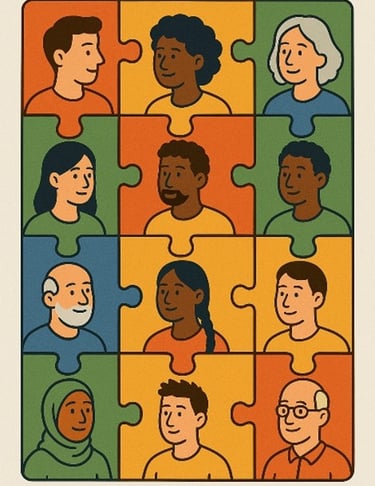
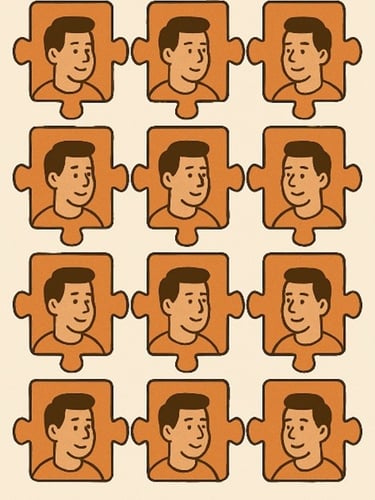
A community can be understood as a puzzle in which each individual is a uniquely shaped piece, defined by particular strengths and limitations [6]. It is precisely this diversity of forms that allows the pieces to fit together and create a complete and meaningful whole; if all were identical, no true unity could be achieved. In this way, difference becomes the very condition that allows human communities to flourish. It is through this reciprocal dependence that communities move beyond mere coexistence toward true cooperation.
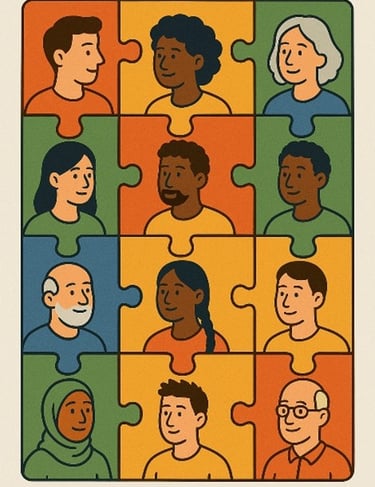
Figure 2. A puzzle illustrates that identical pieces cannot form a complete image, while pieces of varying shapes fit together to create a cohesive whole.
This complementarity allows individuals, in a sense, to “participate” in abilities they do not possess on their own. For example, a person who lacks the physical strength to lift a heavy object may succeed with the help of someone stronger. In this way, cooperation expands individual capacity beyond personal limits. It enables people to go further together than they ever could alone.
Through mutual support, individuals experience both giving and receiving, making it possible to love and to be loved. It is through love that a simple community becomes something deeper and more enduring: a true communion. What was once a collection of isolated individuals is transformed into an integrated whole, much like a puzzle whose pieces are finally joined together. From this logic of love, all human qualities and conditions are recognized as valuable and indispensable. Diversity strengthens society by showing that comparisons driven by envy are pointless and that rejecting difference makes no sense. Every individual has inherent worth and dignity, and each is essential for building a strong and prosperous society [7].
Living authentically in communion begins with recognizing one’s own “shape,” that is, understanding both strengths and limitations. It makes no sense to pretend to be something we are not. Just as it would be absurd for a sinoatrial node cell to try to function as a ventricular cell—thereby failing to fulfill its essential role—each person is called to know and accept who they are, so they can fully develop their own qualities and become the best version of themselves.
At this point, true personal fulfillment arises when individuals recognize their own “shape” and put their gifts at the service of others. In doing so, they not only contribute to the well-being of the community, but also reach the highest level of personal realization available to a human being. I invite you, dear reader, to reflect on the shape of your own puzzle piece and consider how the talents you possess are helping to create a better society.
[1] Bai, J., Zhang, C., Liang, Y., Tavares, A., Wang, L., Gu, X., & Meng, Z. (2024). The relationship between cardiomyocyte action potentials and ion concentrations: Machine learning prediction modeling and analysis of spontaneous spiral wave generation mechanisms. Symmetry, 16(9), 1136. https://doi.org/10.3390/sym16091136
[2] National Center for Biotechnology Information. (2025). Physiology, cardiac repolarization dispersion and reserve [electrophysiology overview]. In StatPearls. Retrieved from https://www.ncbi.nlm.nih.gov/books/NBK537194/
[3] Shan, J., & Zhang, H. (2000). The sinoatrial node, a heterogeneous pacemaker structure. Cardiovascular Research, 47(4), 658–666.
[4] Circulation: Arrhythmia and Electrophysiology. (2009). Cardiac ion channels: Structure, function, and role in the cardiac action potential. Circulation: Arrhythmia and Electrophysiology.
[5] O'Connell, R. P. (2014). Mechanisms of Excitation and Remodeling of the Cardiac Action Potential in Two Model Systems (Doctoral dissertation).
[6] Hannah Arendt. The Origins of Totalitarianism. PENGUIN BOOKS, 2017, p.394
[7] Hannah Arendt. The human condition. THE UNIVERSITY OF CHICAGO PRESS, 1958, p.155